Ecodharma
Welcome to my monthly newsletter, Attunement!
Each month we “tune into” a theme related to mindfulness and
explore a creative practice and tune based on this theme!
This month of August we’re TUNING INTO the frequency of:
ECODHARMA
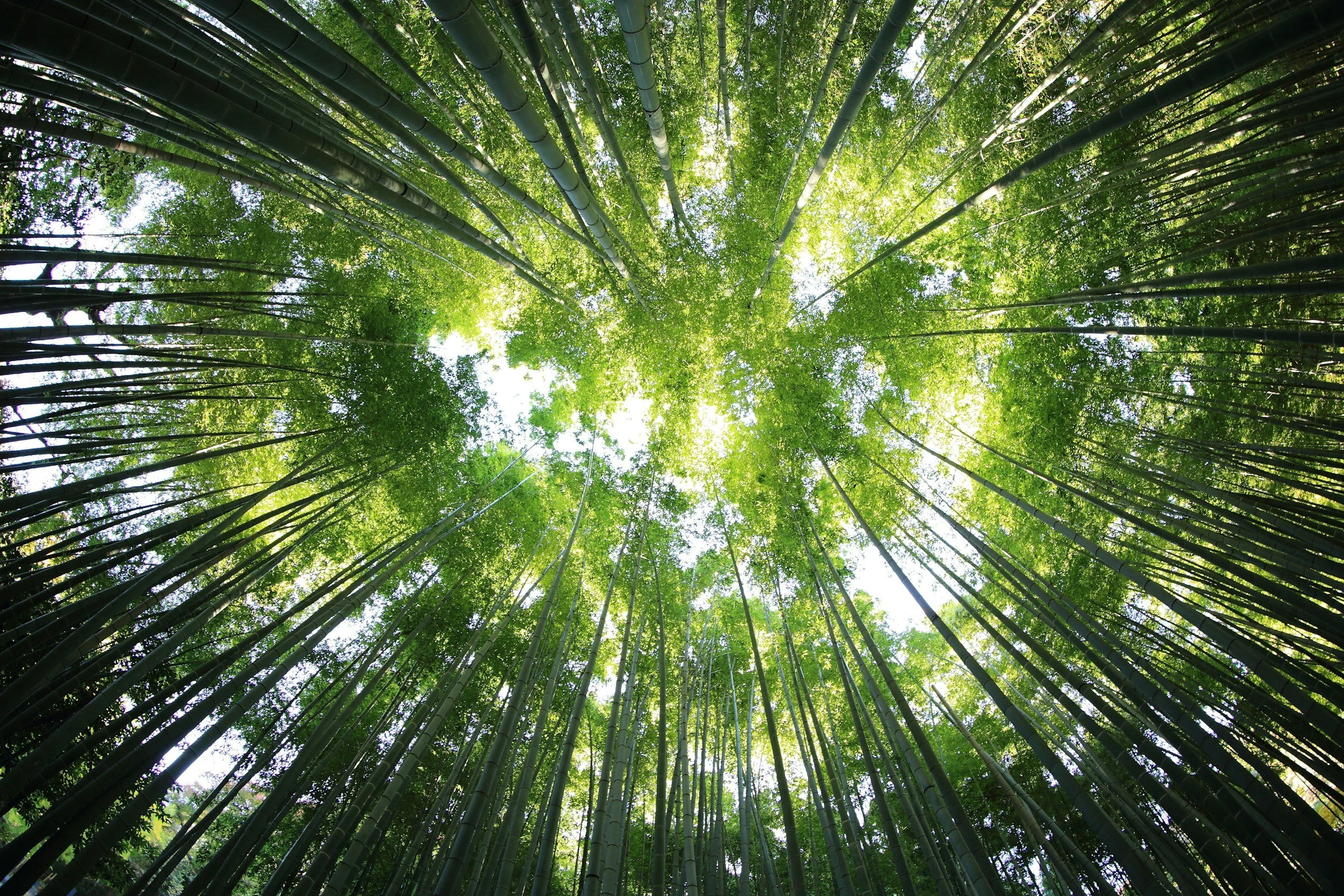
Those who love the world as their own body can be entrusted with the world.
-Tao Te Ching
The smoke from the Canadian wildfires a couple weeks ago was impossible to ignore. Even here in Columbus, Ohio, the air was hazy enough to keep many people indoors for a couple of days, reminding us that what happens hundreds of miles away can directly affect our own lives. It also serves as another tangible reminder that climate change isn't just something happening "out there"—it's increasingly becoming part of our everyday experience.
As I've been reflecting on this, I've found myself returning to a perspective I learned about not too long ago: Ecodharma.
Ecodharma is an emerging field within modern Buddhism (check out books/articles by David R. Loy or Joanna Macy for more on this topic) that weaves together ecological awareness with mindfulness and contemplative practice. The word itself combines eco, from the Greek oikos, meaning "home", and dharma, a Sanskrit word that can be understood as "the way" or the teachings that help us live with greater wisdom, compassion, and freedom.
Ecodharma invites us to consider questions like:
What does it mean to awaken—to ourselves, to one another, and to the Earth—in a time of ecological uncertainty? And what can the natural world teach us about who we are, how we belong, and how we might live with greater care?
Ecodharma Retreats
Ecodharma retreats (such as at the Rocky Mountain Ecodharma Retreat Center in Colorado, founded in 2017, here) are often immersive experiences lasting a week or more, spent mostly outdoors in silence. Participants move between mindful walking, sitting in nature, dharma reflections, and small-group sharing, allowing the natural world to become both classroom and teacher. The journey often begins by simply paying attention through the senses, then deepens into practices of gratitude and connection with the living world before gently turning toward the grief, uncertainty, and hope that can arise when we honestly face the ecological challenges of our time.
Creating an ecodharma mini-retreat of your own!
You don't need ten days—or even a retreat center—to experience the spirit of Ecodharma. You can create your own "mini retreat" by spending an hour or two outdoors without an agenda (a la "forest bathing"). Leave your headphones behind. Walk slowly. Notice what you see, hear, smell, and feel. Find a place to sit quietly. Consider what you're grateful for, what the natural world is teaching you today, and one small way you might care for this beautiful, interconnected home we all share.
Lessons from ecodharma
Ecodharma encourages us to reflect on the scientific reality (and the spiritual truth) that we are not separate from nature. The more deeply we recognize our interdependence with the living world, the more naturally qualities like gratitude, compassion, stewardship, and eco-activism begin to emerge.
Practicing ecodharma reminds me that mindfulness isn't only about paying attention to what's happening inside of me. It's also about paying attention to my relationship with the living world around me (of which I'm a part).
Here are some simple ways to practice:
"Sit Spot" mindfulness. Visit the same place outdoors for 10–15 minutes each week. Each visit, sit and simply notice what has changed since the last time you were there.
Offer gratitude to the living world. Before eating, pause to appreciate the people, plants, soil, sun, and rain that made your meal possible.
Practice reciprocity. Ask, "How can I give back to this place?" Pick up litter, plant native flowers, refill a bird feeder, or simply leave an area a little better than you found it.
Expand your circle of compassion. Extend the same kindness you wish for yourself to the birds, trees, rivers, pollinators, and all living beings that share this home with us.
Cultivate wonder. Learn the name of one tree, bird, wildflower, or insect you encounter regularly. It's much harder to overlook—or harm—what we've taken the time to know.
I'll leave you with a couple of passages from the book Ecodharma by David R. Loy:
As we begin to wake up and realize that we are not separate from each other, nor from this wondrous earth, we realize that the ways we live together and relate to the earth need to be reconstructed too. The means not only social engagement as individuals helping individuals, but finding ways to address the problematic economic and political structures that are deeply implicated in the eco-crisis and the social justice issues that confront us today. (p. 72-73)
We desecrate the natural world when we relate to it only as an instrumental means to some other goal (such as economic growth). We re-sacralize it when we realize and respect its own buddha-nature. "For every thing that lives is Holy" (William Blake) (p. 97)
And a link to the 2014 International Dharma Teachers’ Statement on Climate Change 🌎
Creative Mindfulness Practice:
Meet a Tree
What you'll need: Enough time to go outside, find a tree, and hang out with it for a few minutes
Instructions: Find a tree that catches your attention. It could be in your backyard, a neighborhood park, or on your favorite walking trail.
Spend five quiet minutes getting to know it.
Notice its shape, texture, colors, and scent.
Rest a hand on the bark if that feels comfortable.
Wonder how long it has been there. What seasons has it witnessed? What storms has it survived? Who has found shelter in its branches?
Take a few breaths and notice how your body feels standing beside it
Before you leave, silently offer your thanks.
Then consider: "What lesson(s) might this tree be teaching me?"
When you return home (or if you have a journal, you can do this next to the tree), spend a few minutes journaling, sketching the tree, and/or writing a short poem inspired by your experience.
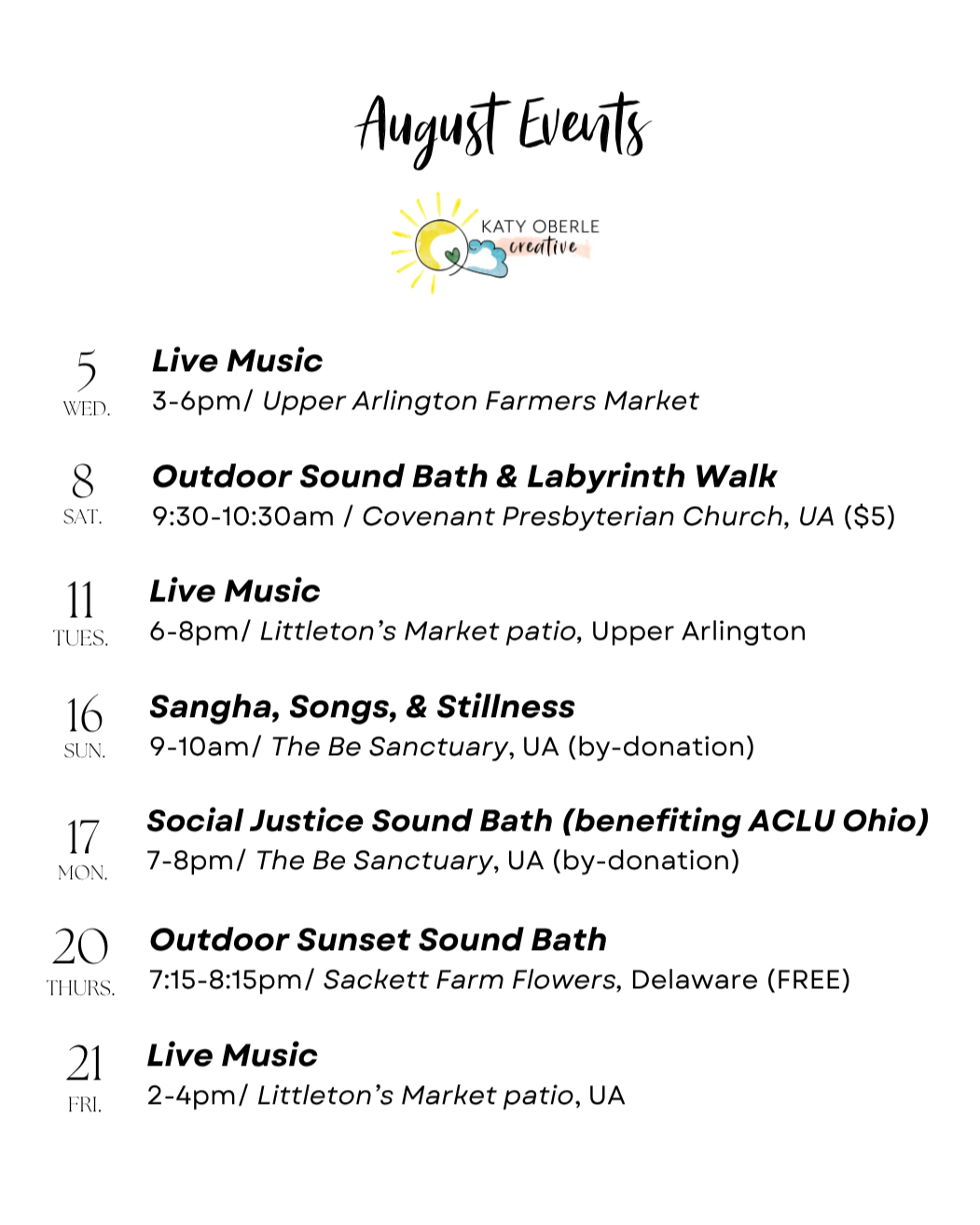
AUGUST Events:
This Month’s Tune 🎵:
Each month I share a tune that resonates with the newsletter theme. For May's theme of ECODHARMA, I've chosen the song "Holy Now" by Peter Mayer. Watch his live performance of the song in the video here.
This song explores the shift from a traditional religious view of what's considered "holy" to a worldview where everything in the natural world is wondrous and holy, even seemingly "ordinary" elements like "a little red-winged bird".
Below are some of the lyrics:
Read a questioning child's face
And say it's not a testament
That'd be very hard to say
See another new morning come
And say it's not a sacrament
I tell you that it can't be done
This morning outside I stood
I saw a little red-winged bird
Shining like a burning bush
And singing like a scripture verse
It made me want to bow my head
I remember when church let out
How things have changed since then
Everything is holy now
It used to be a world half there
Heaven's second rate hand-me-down
But I walk it with a reverent air
'Cause everything is holy now
Wishing you an ecodharma-aware August!
P.S. If you'd like curated support to grow your mindfulness skills, I offer 1:1 mindfulness coaching sessions virtually and in-person at The Be Sanctuary in Upper Arlington, OH ($75/hr). Reply to this email with your interest, and we can schedule a quick phone call to see if it's a good fit.