The Eight Worldly Winds
Welcome to my monthly newsletter, Attunement!
Each month we “tune into” a theme related to mindfulness and
explore a creative practice and tune based on this theme!
This month of June we’re TUNING INTO the frequency of:
THE EIGHT WORLDLY WINDS
Several times a week, I sing and play guitar at local cancer care centers. There are patients who hear me coming down the hall and wave me toward their room so they can request a song. There are staff members who mouth thank you from behind their workstations. There are moments when I sing, and a patient closes their eyes and their face softens in a restful, joyful expression. I’ve even had patients tell me I should go on The Voice because “I’m the best singer” they’ve ever heard!
And then there are the other moments.
One time, as I sang outside a patient's room, I heard a thud and a scrape. The patient had, from their bed, pushed the door shut with their cane. Message received! I (as graciously as I could muster) moved down to the other end of the hallway. Other times there aren’t overt displays of displeasure from patients, but rather simple lack of interest for my music.
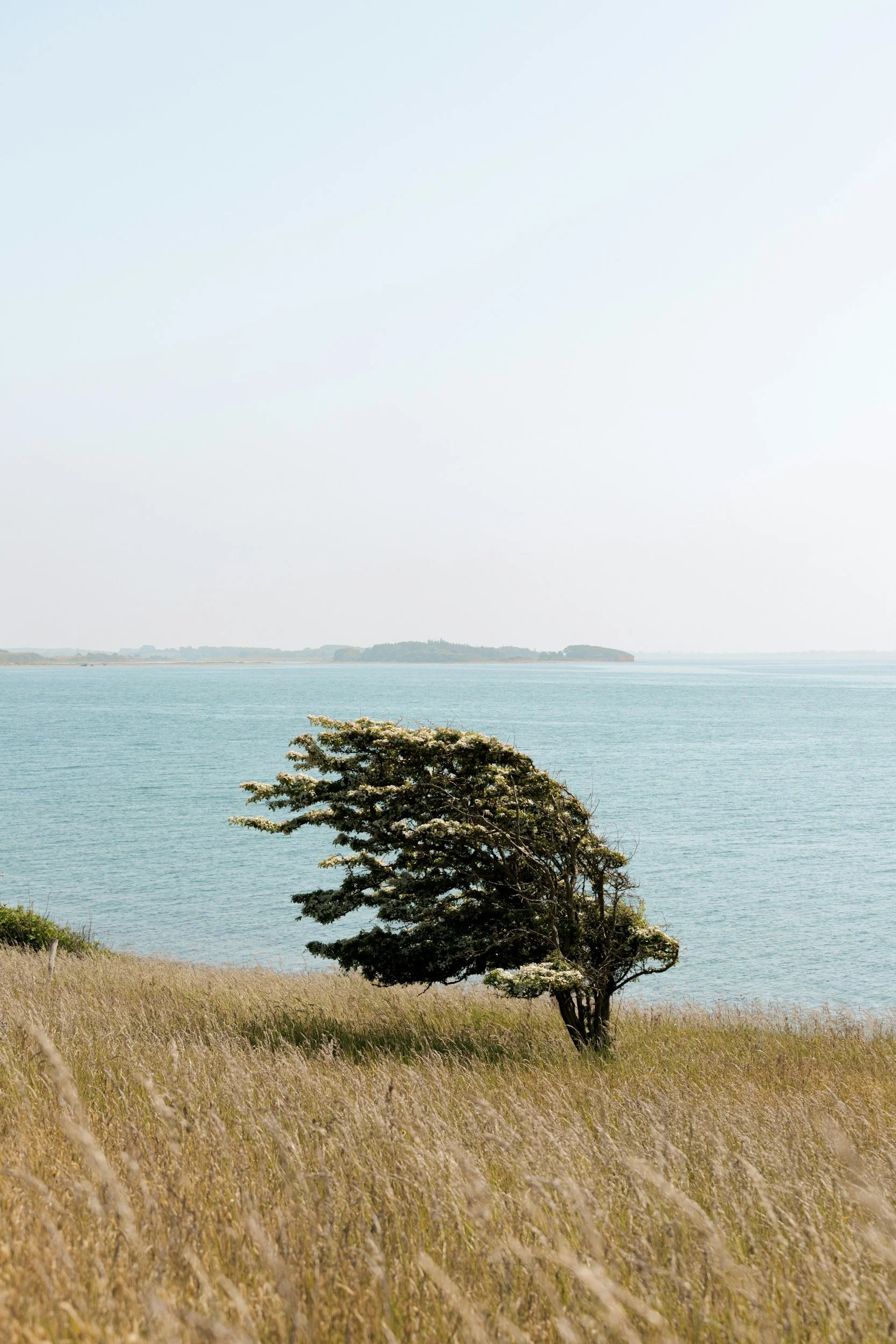
In my first few months of this part-time position, I’d get embarrassed about how prominent my ego was; the slightest whiff of perceived unappreciation from a patient caused me to doubt my talent, and internally it felt like wind storm knocking me off my center.
As the months continued on, however, I was better able to observe these shifting winds—how some patients thoroughly enjoyed the music, while others were seemingly unaffected by it--without my ego ballooning or deflating in the process.
I realized that one reason I was rolling with the changing winds more easily than I had in the past was that I had been learning about the Buddhist concept of aṭṭha loka dhammā — translated as “The Eight Worldly Winds”— four pairs of conditions that blow through every human life. They are:
Gain and Loss
Pleasure and Pain
Praise and Blame
Fame and Disrepute
Every single one of these visit our lives at one point or another, often in rapid succession (and often without regard for our readiness or our feelings about them!).
The Buddha taught that our suffering comes not from the winds themselves but from our reactions to them: our tendency to chase and cling to the pleasant ones, and our tendency to try to avoid the unpleasant ones.
I notice all eight of these winds in my work as a therapeutic musician, in my role as a parent, and in various other aspects of my life.
What I've noticed is that sometimes the most destabilizing winds aren’t the unpleasant ones (i.e. a patient slamming their door). I know in that case, the door-slam is not a referendum on my worth as a human being. This person (who literally has cancer!) is likely in pain. They need quiet. It probably has nothing to do with me.
Rather, it’s those winds of pleasure that can be the stickiest. The Voice comment from a patient, that I mentioned earlier, sent me floating down the hallway on a little cloud of validation — and I noticed, with some embarrassment, how much I wanted to hold onto it, and then how defeated I felt when subsequent patients didn’t shower me with the same level of praise. I was experiencing suffering due to craving more of the “pleasant” worldly winds.
This is what the Buddha was pointing to. The winds themselves are not the problem; they will blow—that is the nature of being human. Our clinging to the favorable ones and our aversion to the unfavorable ones — that’s where the suffering happens.
So what do we do?
If the winds are inevitable, and if chasing the pleasant ones and avoiding the painful ones only creates more suffering, what’s the alternative?
The Buddha's answer is upekkha — equanimity. Equanimity is often a misunderstood concept; some think it means detachment or indifference. But that’s not accurate. It’s actually a quality of warm, inner steadiness — a groundedness that allows us to be fully present with whatever wind is blowing without being swept away by it.
It’s okay to care deeply about things. I care deeply for the patients I sing for. I want my music to reach them. I want to be of genuine comfort to them. Caring is not the problem — in fact, it's essential! The problem is when caring becomes craving — needing others to respond to us in a particular way, needing the validation to confirm our worth, needing the good days to outweigh the hard ones before we can feel okay again.
When I can show up in that hallway with my guitar and my genuine desire to offer care in the form of therapeutic music and human connection, and I hold it all lightly — the smiles and the closed doors, the gratitude and the indifference -- my work then becomes less about what I receive and more about what I share.
This is the practice. And we can practice it our whole lives.
Every moment is an opportunity to tune into the presence of the Worldly Winds and to mindfully choose a skillful action in response to them—an action based on lovingkindness, compassion, appreciative joy, and equanimity.
I'll leave you with some wise words from American Buddhist nun Pema Chodron:
Training in equanimity is learning to open the door to all, welcome all beings, inviting life to come visit. Of course, as certain guests arrive, we’ll feel fear and aversion. We allow ourselves to open the door just a crack if that’s all that we can presently do, and we allow ourselves to shut the door when necessary. Cultivating equanimity is a work in progress. We aspire to spend our lives training in the loving-kindness and courage that it takes to receive whatever appears—sickness, health, poverty, wealth, sorrow, and joy. We welcome and get to know them all.
Creative Mindfulness Practice:
Journaling on the Winds
What you'll need: A journal or piece of paper, and something to write with
Instructions:
At the top of your page, draw two columns. On one side write TOWARD — the winds you've been chasing this week. On the other, AWAY — the winds you've been running from. Then write down each of the four "pairs" of winds, the questions, and your answers:
Gain and Loss: What have I been trying to accumulate, secure, or hold onto? What loss am I avoiding, facing, or quietly grieving?
Pleasure and Pain: Where have I been seeking comfort or relief? What discomfort have I been pushing away, numbing, or trying to outrun?
Praise and Blame: Whose approval have I been seeking? Whose criticism — real or imagined — am I still carrying? What would it mean to need neither?
Fame and Disrepute: Where do I want to be seen, recognized, or validated? Where do I fear being overlooked, dismissed, or misunderstood?
Write freely (without trying to sound enlightened!).
Close by offering yourself the metta (lovingkindness) phrases:
May I be happy. May I be at peace. May I be free from suffering. May I live with ease.
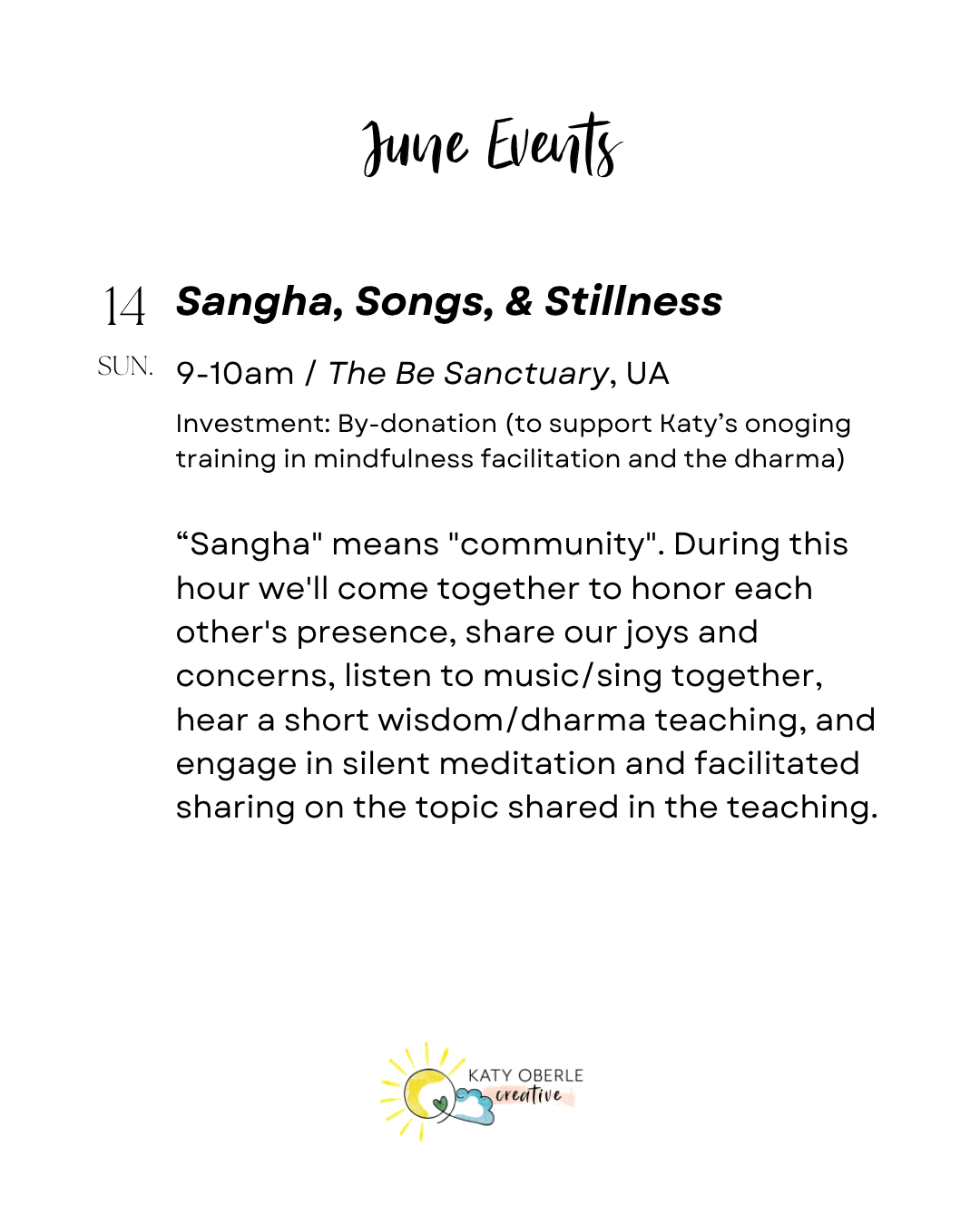
JUNE Events:
This Month’s Tune 🎵:
Each month I share a tune that resonates with the newsletter theme. For May's theme of THE EIGHT WORLDLY WINDS, I've chosen my original song "With Me", from my 2022 EP Driftwood (available anywhere you stream music).
This song is about experiencing emotional pain and feeling like it's going to last forever, and then trying all we can in order to go away (to no avail), until we're finally able to bring intentional loving awareness to our experience and really just allow the pain to be with us. Sometimes, then, we might find that this mindful acceptance actually enables the painful feelings to loosen their grip on us, because we have lessened our aversion to them.